CPG Recruiters Bentonville AR
479-285-2262


In most hiring processes, timing isn’t what breaks things.
Communication is.
A common question from both candidates and hiring teams is simple: how long should it take to receive feedback after an interview?
The professional standard is clear. Candidates should receive an update within 2–5 business days. If it will take longer, that can be handled, but the company needs to let the candidate know.
Yet in practice, many processes extend well beyond that, often with little to no communication along the way.
That gap between expectation and execution is where companies begin to lose momentum—and often, their strongest candidates.
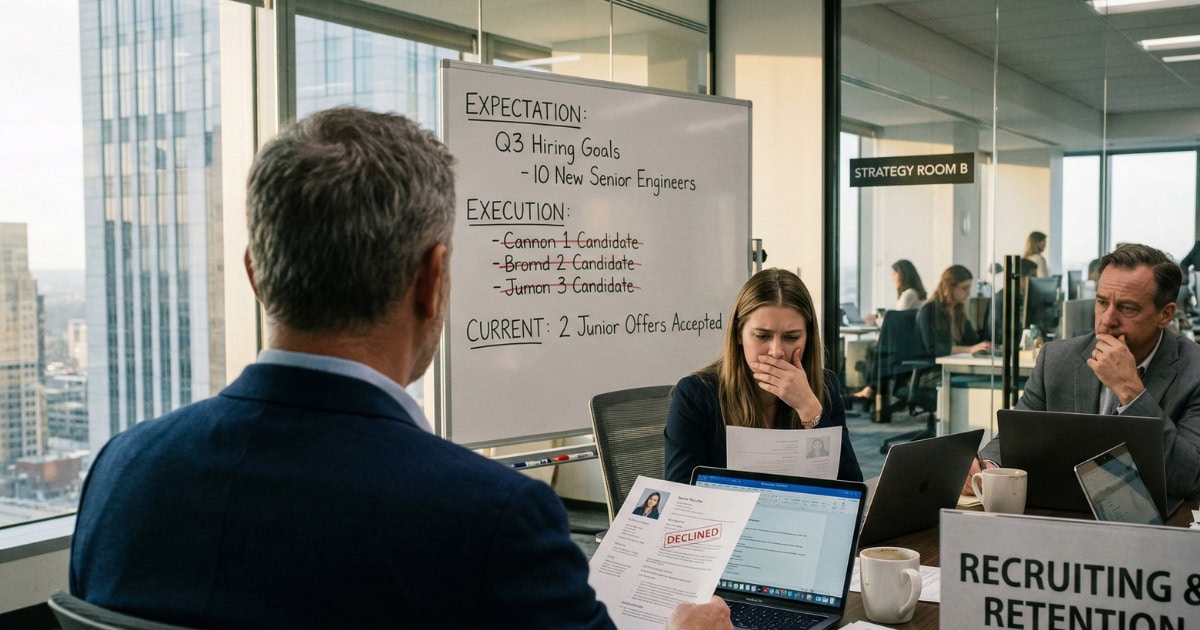
High-functioning hiring teams operate with a consistent rhythm. Within 24–48 hours of an interview, internal feedback is gathered and shared. Within 2–5 business days, candidates receive an update.
That update doesn’t need to be a final decision. It can be next steps or even a revised timeline. What matters is that candidates aren’t left wondering where things stand.
Organizations that maintain this level of communication tend to see higher candidate engagement, faster hiring cycles, and stronger acceptance rates.
Most delays aren’t intentional. They’re typically the result of scheduling challenges, misalignment between stakeholders, or competing internal priorities.
But from a candidate’s perspective, the reason rarely matters.
After 5–7 business days, candidates start to question their standing. After a week or more with no update, many will mentally move on or pursue other opportunities more aggressively.

One of the most overlooked aspects of hiring is how quickly experiences are shared.
Candidates talk. They share their experiences with peers, colleagues, and professional networks. Over time, those experiences shape how your company is perceived in the market.
In consumer goods—particularly within tight ecosystems like the Walmart and Sam’s Club supplier community—reputation travels quickly.
A slow or unresponsive hiring process doesn’t just impact one role. It can influence your ability to attract talent across the organization.
The good news is this is one of the most fixable parts of the hiring process.
Clear communication—even without a final decision—keeps candidates engaged and preserves trust.

In a market like Bentonville, where companies are more selective and measured, the ones that stand out are often those that execute the fundamentals consistently.
Hiring is not just about identifying the right candidate.
It’s about how your organization shows up throughout the process.
In many cases, the difference between securing top talent and losing it comes down to something simple:
Following up when you said you would.
One area that often gets overlooked is how feedback timing reflects internal alignment.
When feedback is delayed, it’s rarely just a communication issue. It’s usually a signal that stakeholders are not aligned on what they’re looking for, how they’re evaluating candidates, or how quickly they’re willing to make decisions. From the outside, candidates may interpret this as a lack of interest. Internally, it’s often a lack of clarity.
Strong hiring teams don’t just move quickly—they move with intent. They know what a “yes” looks like before the interview starts, and they have a clear process for gathering and consolidating feedback immediately after each stage.
Another factor is accountability. When feedback timelines aren’t clearly defined, it becomes easy for decisions to drift. A simple expectation—such as providing feedback within 24–48 hours—creates momentum and keeps the process moving forward.
It’s also worth noting that candidates are evaluating more than the role itself. They are assessing how decisions are made, how communication flows, and how organized the company appears.
In many cases, the speed and quality of feedback becomes a direct reflection of how the organization operates day to day.
